
Essay
Everything is connected to everything else. There is a fabric of life, a tapestry that grows as we ourselves grow and move through life. Each event is a thread that weaves through the others. Over time, a greater design starts to emerge—the culmination of our entire past represented in a single fabric. You cannot pull on any one thread in this fabric of your life without affecting the entire tapestry, and the design as a whole. None of it is isolated from the rest of it.
We have such a tendency to want to look at things in isolation, analyze them on their own. However, nothing in our lives can be taken and evaluated on its own, it’s just not how it works. You might know this intellectually, as the physical sciences embrace this idea fully. Einstein’s great revelation of general relativity was that everything in the entire universe is relative to everything else, there is no great universal backdrop that we can measure against. However, this doesn’t stop the other sciences—biology and medicine—from taking things in isolation to measure them and make grand conclusions from it.
Physics tells us that we cannot take a single molecule from inside our own body and isolate it from the rest of the world—it is impossible. What of the motion of the earth moving around the sun, the sun moving through the cosmos, the tachyons from the sun penetrating the planet, or the gravitational waves from the central black hole of our galaxy? These all have influences, and must be accounted for.
In the same way, our lives are completely influenced by everything we are doing throughout the days, weeks, months and years. It is impossible to look at one situation in your life, analyze it in great detail, and come up with any useful information without also considering the other things you are doing.
From surface-level to the depths
Let’s look at an example from my own life. Yara said something to me and it hurt my feelings, put me on the defensive. In my mind I was thinking, “why would she say that? Doesn’t she see what I do for the family? Does she not appreciate me?” What I completely overlook is that I didn’t sleep well the night before, and woke up fairly groggy and irritable. She has actually said it as a joke many times before, and we usually both laugh and hug and connect with each other as a result, but this time I was simply more sensitive.
This is the surface level, but it always goes deeper. Why didn’t I sleep well? It could have been any number of things—late bedtime, screens before bed, coffee too late in the day. If it was a late bedtime, then why couldn’t I get to sleep on time? Or why did I feel the need to stay on my screen longer than usual? This rabbit hole goes deeper and deeper, and shows us that we can’t really look at anything in isolation.

Modern medicine has refused to consider this at all in any real, meaningful way. This is obvious when you consider that more than 10% of the US population over 18 years old take antidepressants. That is almost 27 million people in the US alone. I wonder, how many of these 27 million people were asked by their doctor: what time do you go to sleep, what is your daily screen time, how much sun do you get on your skin, how often do you exercise, how much TV do you watch?
And this is the easy stuff, the low-hanging fruit. Perhaps this is why most people themselves think they can look at pieces of their life in isolation and get meaningful information from it, let alone make a meaningful change to it. Do you have trouble sleeping at night? Why? Follow the thread backwards and see where it leads.
Beliefs shape reality
What about your beliefs, about the world and about yourself? How many times have you heard someone say something about themselves so matter of factly that it must have been written in stone? “I’m not a morning person,” “it’s hard for me to sleep,” “I just can’t quit,” or “it’s hard for me.”
Surprisingly, modern medicine does acknowledge the power of belief—the placebo effect. It has been studied in detail and proven that simply believing something is good for you will actually make it so. Obviously this only applies to things that are actually neutral, like a sugar pill—so don’t try it with poison. But, this sounds interestingly similar to turning water into wine though, eh? Was that story just a metaphor…?
With this in mind, wouldn’t these beliefs about yourself be creating the very reality that you are proclaiming exists? At what point can it be said that you have simply decided things are this way? We humans are born as tiny babies and continue growing and evolving throughout our life. Wouldn’t a belief like “I’m just not a morning person” actually stop your own growth and evolution?
More to the heart of the matter, what are your beliefs about your body? This one is key, the lynchpin. Do you believe that your body’s natural state is health and vitality, that it is naturally capable of healing itself? Or do you believe that the body needs maintenance, like a car. Sometimes it needs the oil changed if you wish to continue driving it, otherwise it will simply not work.
It’s funny that we humans tend to look at things through our human lens. After all, everything ever created by humans begins to immediately begin the process of degradation and breaking down the moment it is completed. However, this is not at all how nature works. Things are born, and from the moment they are born they begin the process of growth and expansion. A tree does not need its oil changed, nor does a gorilla need its brake pads replaced periodically.
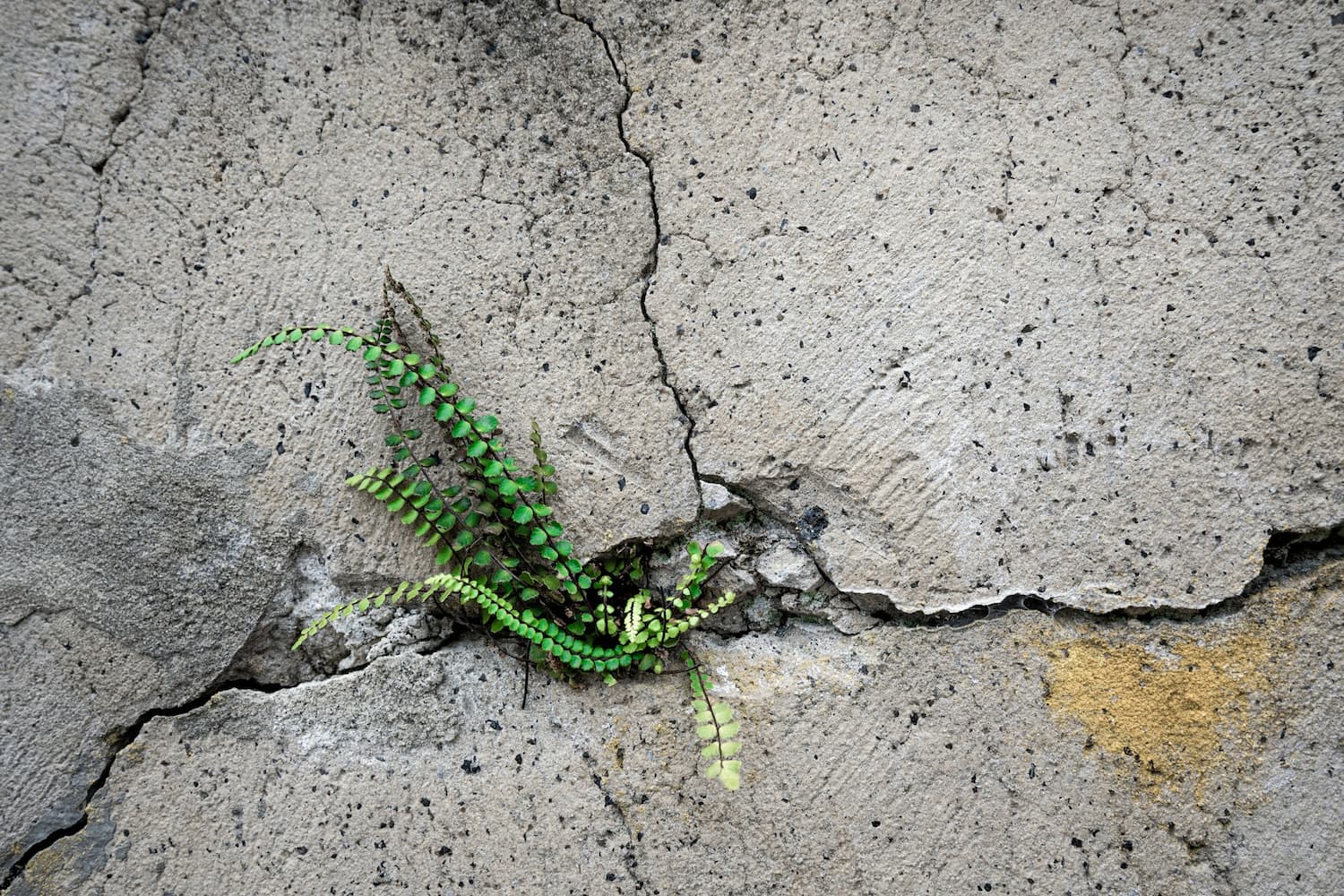
Why then do we look at our bodies and think they behave like a car, needing constant maintenance? And, more importantly, if we believe this about ourselves—about our bodies—do we not create this reality for ourselves? Remember the placebo effect… It works the other way too.
Believing you are not a morning person is the easiest way to ensure that you will always have a difficult time getting up in the morning. Believing you are lazy is a great way to make sure you are always laying around wasting time. Believing you are a human being who’s natural state is health, vitality, energy, focus and creativity is the best way to break free from these old thought patterns and start a new season of your life.
Challenging the roots of belief
Our beliefs are very often not the result of logical thinking. It’s much more common that our beliefs are the result of our limited experiences and the comments and thoughts of others. It seldom takes more than 1 or 2 people telling you that you’re lazy—and a couple lazy weeks—to cement into your mind the belief that you are a lazy person. But when dealing with beliefs like these it’s very useful to apply logic to the situation.
What’s more likely—that you are lazy, or not a morning person, or stupid, or not creative—or that maybe your life has seasons to it like everything else in nature? What is the more logical answer here?
Can it really be this simple? That our life goes through a winter, or a transition, and then someone tells us their opinion of us, and we take that belief and internalize it for the rest of our lives… I have been working with people for many years as a transformational coach, and I can’t stress enough how common this is.
How many teenagers are told they are lazy or are not morning people, right in the season of their life when they need the most sleep and are just starting to engage with the technology of the world (screens) and therefore have their circadian rhythms all jacked up? Do they all internalize these beliefs and carry them forward? No, but many do.
How many kids were told they are stupid or have difficulty learning, during the season of their life that they want to be outside and playing, not inside and studying nonsense with seemingly no applications. Many of these kids will internalize these beliefs and carry them for the rest of their lives.
Most importantly, how many parents and adults are going around making senseless and illogical comments about other people and children regarding how they see them? Where is the logic in telling a tree in the middle of winter that it never has any leaves and is ugly? Certainly these people don’t recognize the potential lasting damage they can cause, but the damage is there and being done all the same.
Most of our beliefs are not the result of intention and logical thinking, and many are the result of what we just discussed, trauma. It is time now to go through all our beliefs, a roll call if you will, and review each one. If it is not currently serving you, pull it up—root and stem. Plant the seeds of a new belief, one that will help you shift in the direction you would like to move.
Understanding the connections
It’s not always easy to change a belief you have carried with you for a long time, there is a lot of history and momentum built up over the years. Thinking of a car again—this time the metaphor actually applies, momentum—if you are driving down the road at 70mph and want to make a sharp right turn, you cannot simply crank the steering wheel all the way to the right. The wheels will indeed turn, but the car will continue going the same way it was going before, likely flipping over.
There is a process, you must slow the car down until much of the momentum is gone and then gradually turn it. Sometimes people can make sudden, great shifts in their life as a result of a great insight or vision they had, but most people need small changes over time. Personally, I am certainly in this latter category. I have to make small, gradual changes over time to shift my life.
If you have believed you are lazy for example (as I have), there is likely a great deal of momentum in this belief—many experiences in the life that have proven this belief true. Time wasting, video games, movies, shows, scrolling, etc. You cannot simply decide to believe that you are no longer lazy, it isn’t that easy. The behaviors have to change, which, obviously are in part coming from the belief itself. This is a viscous cycle. The more you engage with the behaviors, the more firm the belief.

Moreover, the body has it’s own intelligence. If you try to hold the belief you are not lazy, while continuing to behave like a lazy person, nothing will change. You cannot fool your body, mind and spirit. It has its own intelligence and can see through this charade.
This is the same for any belief. Whether you believe you are not a morning person, or that you are not creative, or that you cannot break an addiction, or that it is difficult to learn things. If you try to change the belief—that you are creative, for example—without doing any of the work to bring about creativity, then nothing will change.
So then, what are we to do? Start with small changes first, and gradually change more and more over time. The first step is determining where to start though, what are the pain points in your life. Let’s look at creativity now.
Cultivating creativity
I believed for most of my life that I was not a creative person. I never enjoyed drawing, painting, writing, or the arts at all really. I did enjoy singing, and have always sung, but I never (until 7 years ago) did it in front of people. I have very clear memories of people telling me I didn’t have a good voice, and this gradually cemented itself as a firm belief in my mind. I didn’t have it—a good voice or creativity as a whole really.
Many of you probably know me as a musician and singer, so perhaps its obvious now that I worked on this belief greatly over the years. It is still there deep inside me though, waiting to poke its head out at any opportunity it can. I won’t go into detail here about my journey of overcoming this belief as it relates to music and singing, as it’s a very long story and deserves its own space. If you want to hear it, email me and let me know and I will share it.
Here, I want to talk about my journey with writing. As I said before, I firmly believed I was simply not a creative person. This belief was so engrained, I can remember several conversations with my wife where I mentioned not being creative at all and her pointing out that I was currently working as a professional musician. For whatever reason though, I thought the music was a special, one-off situation and I wasn’t creative aside from that.
Then, my work shifted. Instead of working as a musician and shamanic healer primarily, I started spending more time designing websites and helping friends with their brands and messaging. I was tired of traveling and being away from my family, so this allowed me to work from home. I wanted to continue my work as a musician and healer, but I needed to share more with the world so they knew I existed. Living in the jungle has its difficulties, the main one being that nobody knows you exist unless you share online.
Now needing to write copy for websites, as well as create content to share with friends, family and potential clients, I was forced to write. It was very uncomfortable for me, and I did not like anything I was writing. Everything felt so forced, and many days I would just stare at a webpage thinking, “what am I trying to say here?”
What changed now? Not much, the difference now is that I always show up. Every morning at 4:30am I begin writing for at least an hour, longer if the kids decide to sleep in (this morning they did). No matter what, I sit in front of my laptop (with blue blockers because its still totally dark) and I stare at the blank page. I stare at it until something moves me, a thought, an idea. Sometimes it takes a long time. Today I stared for 15 minutes at this half written article before typing a single word.
Circling back to the main point of this essay on interconnection and beliefs, the message here is simple. Change takes work. You have to actually show up, somehow. Whatever that means and looks like to you is your own, but nobody can do it for you. No therapist or shaman or guru will do it for you. They might help, but more often then not they interfere with the internal process that is taking place within you.
If you believe you are not creative, this belief is not true or logical. Your birthright as a human being is creativity, it is your essence. If you don’t feel creative—if it’s not part of your human experience—it is because of some combination of beliefs you are holding and behaviors you are engaging in (or not) that are preventing this creativity from emerging.
A return to logic
Everything is connected to everything else. This is the way the universe works, nothing can be viewed or analyzed properly in isolation. Embracing and internalizing this universal truth allows you to start to see the threads running through all the different facets of your life. Only from here is true, lasting change possible at all.
For whatever reason, we prefer to look at things on their own, in ways that are easier for us to understand. If your car doesn’t start, it’s very often an issue with the battery or the alternator. The chain is pretty simple and clear. Human beings are not cars though, as we are infinitely more complex than anything that could possibly be created by human hands.
Perhaps we do it because it is easier for us to grasp, but I think this is only the case because of the world we grow into, because of how we were taught as children. When we grow up completely connected to nature, surrounded by love and family and a deep reverence for life and the natural world, it is much easier to understand and see the connections linking everything together. This is how nature works after all. Everything effects everything else.
On every scale, the universe operates in interconnected cycles. At the galactic level, a supermassive black hole sits at the center of our galaxy, radiating gravitational waves that, though imperceptible to us, influence gravity and spacetime. These emissions fluctuate over time, creating ripple effects throughout the cosmos. The sun operates in cycles too, with its solar emissions rising and falling in an 11-year rhythm observed through sunspots.

Our Earth is in constant flux as well. The precession of the equinox is on a 25,000 year cycle. Seasons change as the earth moves around the sun. Day turns to night, and back to day again, all while the tides constantly flow in and out due to the moons influence. Volcanic cycles, ice ages, meteoric impacts, this planet is constantly changing. And the cause? What causes a magnetic pole reversal, or an ice age? What causes a cloudy day, or a sunny day, or a thunderstorm?
Now, bring this down to your everyday life. If you wake up one morning feeling mentally foggy, what is the cause? Did you stay up late? Were you drinking alcohol? Did you have too many coffees or donuts yesterday? Are you struggling with a stressful situation? Was your bedroom dark enough? Have you been getting enough sunlight? Are you wearing your AirPods too much (and frying your brain)? Was it a stressful week at work? Neighbor dogs barking all night?
The truth is, everything we do affects us in ways we don’t always recognize right away. And sometimes, the causes of how we feel are so delayed or interconnected that we miss the links entirely. That’s why it’s essential to focus on the things you can control: maintaining healthy sleep cycles, spending time in sunlight, eating nourishing foods, and balancing stimulation to name just a few.
When you take care of what is within your power, you build resilience for the things you can’t control. A tough day at work or a surprise life challenge becomes far more manageable when you’ve set yourself up with a strong foundation. And when the world throws something truly unexpected—be it Mercury retrograde, a sudden storm, or cosmic shifts—you’ll be ready to face it with clarity and strength.
Many blessings my friends.
Michael