Essay
Boundaries are often misunderstood. Many people view them as walls that limit their freedom, but in truth, boundaries are the foundation of true liberation. They protect us from external chaos and our own self-sabotaging tendencies, offering structure and clarity in a world filled with distractions and temptations. I’ve learned this lesson firsthand—through struggles, experiments, and observations in my own life. And while boundaries may seem restrictive at first, they ultimately create a space for us to thrive. Whether it’s managing relationships, overcoming addictions, or reclaiming control over our daily routines, boundaries are not barriers—they’re bridges to a more meaningful, balanced life.
The funny thing about boundaries is that the more firmly in place a boundary is held, the more freedom in your life will result from that boundary. Most people associate boundaries with limits, a reduction in freedom, but if these limits are self-imposed for specific reasons, then they very often will increase the freedom you experience.
Here is a great example. We have a black lab, Percy, who’s almost 2 years old now, still quite the energetic puppy. He is also one of the biggest dogs around, and many of the locals are intimidated by him. For a long time, he always just ran free and did whatever he wanted. Then, he started to chase after motorcycles, follow cars home and be lost, break into the chicken coop occasionally, and eventually he killed one of my neighbors sheep.
After that, I decided to keep him on a leash for several weeks. I put up a run, a long cable between a tree far away and a post on our porch, and connected him to that. He chilled out right away, and got seemly depressed a bit. I really didn’t like doing this to him, but I had no choice: we don’t have a fence and I couldn’t risk him escaping to kill another animal.
3 weeks later I started to let him off the leash whenever I was outside and paying attention to him. He would always stay close if people are outside, only ever getting into trouble when he gets bored and is left alone. Now, he’s a very happy dog and hasn’t killed any animals in a long time. In fact, many times when he gets overly excited or scared, he will run over to his leash with enthusiasm. He has no problem with it.
The leash to him represents security, safety, and not from the outside world, but from himself. Somehow he knows its for his own good, because otherwise he might get bored and go get into trouble. I have never had to call him more than once to his leash, he runs over happily. I can almost hear him saying, “ah yes, good call Michael. I was about to get into trouble.”

Many people would see something like a leash as more like a chain, something to prevent you from doing what you want to be doing. It is the absence of freedom. However, in this case, for my dog Percy, the leash actually represents total freedom. Once he is on that leash, he can do whatever he wants, anywhere from my front porch to the tree its tied to far away. Contrasted with the freedom of no leash, where he cannot do whatever he wants, at least not without consequences. If he kills another animal, it is very likely that one of the neighbors would poison him, or one of the cows would kick and maim him. The only reason the leash helps him experience true freedom, is because it is completely firm. Once the boundary is in place, it is immovable until I take it off.
Boundaries = freedom
Think how this might apply in your own life, having firm boundaries. For example, I will not purchase or consume sugary snacks and beverages, ever. That is a boundary I have put in place after much consideration and experimentation with my own health. Some people might consider this a harsh boundary, limiting my freedom; however, it is quite the opposite. This boundary allows me the freedom to go rummage through my pantry and snack on anything I can find, without experiencing any negative consequences from sugar. Because I held my boundary in place, there is nothing sugary in my house and therefore I am free to eat whatever I want in the house.
When I was trying to quit tobacco, I had a unique approach that utilized this idea of boundaries and freedom. I told myself, ok, I can have tobacco anytime I want. However, when I use it, I have to walk all the way to the top of the hill first (it was a really big hill). This firm boundary helped me immensely in managing my addiction. As is the case with addictions, very often an urge rises in a moment and if we can simply weather that storm of desire for a couple minutes, then the storm disperses. I would often think, “I would love some tobacco, but not enough to walk up that hill.” And, if I did walk up the hill, by the time I was using the tobacco I was in a completely different state, as the intense walk and time it took to get there allowed me the time to reflect first.
Boundaries are a powerful tool, especially when we want to find freedom from addiction, we just have to be creative with how we apply them. Truly, the human being needs boundaries to thrive, it needs firm structures in place. A great example of this is the circadian nature of our biology, how it changes from day to night. This structure is immutable, determined not by any human, but by the sun and Earth. If we align with this circadian rhythm of the Earth, then we are healthy. If not, then we are sickly and prone to disease and illness.
If I then place a boundary in my life, say, to wake up every morning at sunrise, and eliminate all lights in my house after sunset to facilitate sleep and not interfere with the dark period, is this limiting my freedom? The vast majority of people would consider this situation to be very limiting, that I am less free than they are. But, my question is, free from what exactly? If this daily rhythm means I am more free from disease and illness than you, than who exactly is experiencing more freedom?
We need to question everything, and begin to think logically. Otherwise we leave ourselves painfully open to being controlled by other people’s way of thinking and doing.
Types of boundaries
Boundaries can be applied to every aspect of life. What about a boundary on the types of people you spend time with? Being surrounded by people who live stagnate lives, not really doing anything and without any motivation to move forward or build something, invites this stagnation into your own life. Spending time with alcoholics or other addicts invites the energy of addiction into your own life.
This is a powerful realization, and no amount of personal willpower you can exert will protect you from the influence of being around people with a much lower frequency than you. It is dose dependent. The more time spent with them, the more you will be influenced by their state. Nobody is free from this, that is why boundaries are so important. Check in with yourself to see at what point are you starting to tip over into their lower frequency. This is where you put the boundary for the future. Maybe its 1 client a week, maybe its 20. Everybody has different capacities, and its important to know what yours is.
Another boundary I have is I will not buy food items that do not grow here in Costa Rica. This is a new boundary that we have been playing with for a couple months, and I am absolutely loving it. This prevents me from buying a great amount of imported goods. Of course, we still have to buy imported goods as Costa Rica does not manufacture very much of anything, but it’s a great start for me. This boundary has actually resulted in more inner peace in my own life, knowing that my food is not being shipped around the world in giant cargo ships.
What about a boundary on screen time? This is probably one of the best examples of a boundary that has massive implications, but is difficult to manage. We just have to be creative in how we apply the boundary. For example, my wife and I have a firm boundary: no screens are allowed after 5pm every single night, no exceptions. 5pm starts our bedtime routines, and also ensures peace between us and some moments to connect before we sleep at 6pm.
We have 2 toddlers who sleep in our bed with us, so bedtime routine is very often a religious experience. Cuddles, screams, crying, laughing, tickling, wrestling, break-downs, injuries, you name it. It could be anything. On top of the kids, I value my relationship to my wife more than I could ever hope to describe. We don’t allow screens after 5pm because it’s not worth it. There is no message, no social media post, no article, no email, no phone call, nothing in the entire world that is more important to me than being present with my wife and children every night for bedtime.
I am allowed to use my screen after the kids go to bed, but then I approach another one of my personal boundaries: no screens or lights after 7pm. This boundary is in place to ensure my own maximal health with respect to circadian biology. Light and screens during the planets dark cycle disrupt circadian rhythms which regulate basically every process happening inside the body. The health effects are truly immense, and if you want more details then go read my other articles where I talk about this in much more detail.
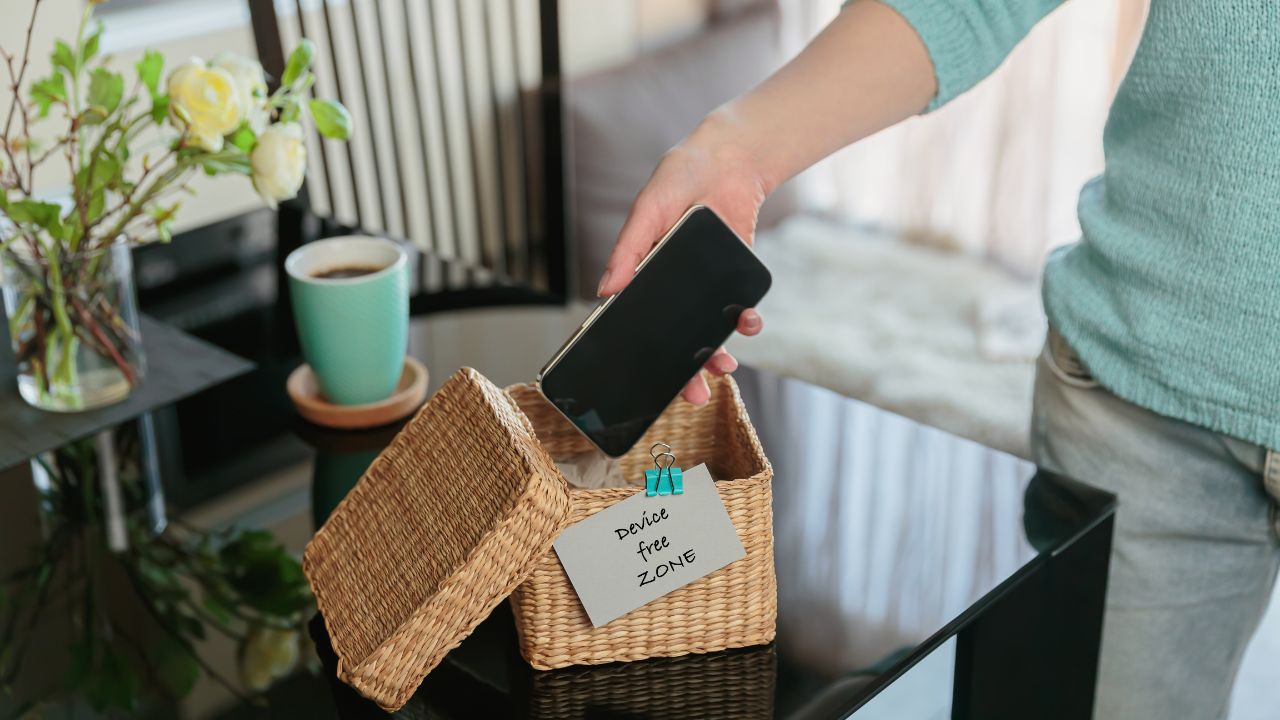
This usually gives me 30-45 minutes after the kids are asleep to use screens before I hit my boundary, time enough to perform any critical tasks I wasn’t able to complete before 5 like respond to any critical messages. More often then not though, I meditate or gently stretch in the dark while listening to music. I rarely ever push past my 7pm boundary on screens and lights, and when I do the effects are noticeable. The effects are noticeable because the boundary is important, thats why I set the boundary in the first place.
As you can see, I have a great many boundaries in my life, yet I feel completely free. It’s true, I don’t go out and play poker at night like I used to enjoy, nor do I watch movies anymore or eat refined sugar at all. However, those actions and behaviors didn’t serve me to begin with, which is why I put up the boundaries. Freedom to sabotage myself, my health and my overall well-being is not true freedom. In fact, it is the opposite of freedom. It is addiction.
I can sense a difference in my mind and body when I wake up in the morning depending on whether I turned my screens off at 7:00pm or 7:20pm. I would have never been able to connect the specific effect of grogginess and mental fog in the morning to screen usage in the evening without my boundaries, let alone determine the optimal time for ending screens. Why? Because I was “free” before, free to engage in my addictions to staying up late, eating sugar in the day, and watching youtube and movies at night.
Boundaries are the source of true freedom in life. They allow us to keep ourselves safe from ourselves and the outside forces that inevitably influence us. Imagine being out in the wilderness and needing to construct a dwelling to keep yourself safe from bugs, snakes and rain. Once you have built it, you are now safe from the rain and snakes—so long as you stay within the boundaries, they cannot get you. Without the boundaries, are you able to avoid the rain and snakes? Yes, but not always, and depending on the intensity of rain or the specific snake, the consequences could be substantial.
Boundaries in our lives work the exact same way. Use them to build yourself a safe haven in this world so full of people and corporations and programming constantly trying to convince you to do this, try that, look here, and go there. Everything wants your attention and everybody has the solution you need, supposedly. Having healthy boundaries in life offers you a chance to sit down, study your life, determine what your values and needs are, and then implement strategies to protect those values and needs from being sabotaged, or to ensure they are always met.
How to implement boundaries
The first step is to take some time to review your life with the goal of determining where exactly are the pain points for you, the places you are struggling the most. Is it relationship issues with your partner? Or mental fog? Addiction to substances? Maybe it is a health problem like a skin condition or other disease. Whatever it is, you have to start by finding it. Take some time to journal and write to discover what are the main pain points of your life. It is important to be very honest with yourself to find the correct pain point, the lynchpin.
Next, determine a strategy that can be implemented to address this pain point. In other words, determine an appropriate boundary. For example: if you are having relationship issues with your partner, then you need to spend more time with them. A clear boundary can be implemented in a way to always protect a certain time of the day to reconnect, or perhaps once a week for a deeper connection. If you are lying to them about something, than a boundary that you will be radically honest with them.
If mental fog is an issue then having better boundaries around bed time, waking up with the sun, and overuse of stimulates will be very effective. If you are struggling with addictions to substances then we need to get a little more creative with boundaries, as its often not enough to simply decide to stop using. Often very helpful is taking a 10 minute+ walk around the block before allowing yourself to use. You might need to avoid certain places or friends as well, and start other practices to compensate. Start slow and build momentum by implementing a boundary that is 100% reasonable and also starts you in the direction you want to go. Then, after succeeding for awhile, make the boundary stronger. And stronger. Substance abuse is a large topic on its own, and if you need additional help then please reach out to me. There are specific strategies that can help.
Health issues and disease are great impetuses to implement healthy boundaries in your life. These could be anything, so it depends on whats going on with you. An example from my own life is a skin rash I was dealing with for a couple of years. Slowly and steadily it grew from nothing, to an absolutely menacing and insanely itchy skin rash that would appear seemingly randomly. The kind of itch that you can’t escape from, that you would do anything to be rid of, anything.
After trying a multitude of different strategies to control it, all with minimal success, I slowly started to try giving up certain things in an effort to figure out the cause. Something specific was definitely causing it, and I wont recite the entire sad story of a man not wanting to come to terms with giving up something he loves dearly: sugar and bread. I have a very firm boundary around not consuming gluten and refined sugar, and it is for a crystal clear reason—I get itchy rashes on my skin if I do.
So find out what are the things in your life that you are struggling with, your pain points. Investigate them deeply, and figure out a boundary you could put in place to address it. For some people this can be very hard: saying no. For others they need help saying yes. Boundaries can work both ways. Committing to avoiding certain foods help you learn how to say no, and deciding to turn your phone off earlier to spend time with your wife helps you learn how to say yes to her.
The heart of the matter is an understanding that you are at the center. Nobody can do these things for you. You are the one that decides to avoid toxic people, spend more time with your family, avoid eating sugar, get up earlier, give up tobacco use, or whatever it is that needs to happen in your life.
Most people just want a pill, when what they need is a boundary.
Many blessings my friends.
Michael